Gardening & Feeding Guide
How to bring birds to your backyard garden in Iowa
Support native bird populations right in your own yard — with food, water, shelter, and layered native plantings that work with nature instead of against it.
The wonderful Museum of the Grand Prairie in neighboring Illinois hosted a great online talk about how to design your backyard to support birds. You can watch the full, hour-long talk here (the talk begins around 9 minutes and 30 seconds into the recording). The talk inspired us to pull together some resources on how to support native bird populations through our very own backyards.
There is also a great guide from Iowa State University on using native plants to support birds — a printable 10-page guide on attracting birds to your yard, which you can view here. On this page we summarize some of the key points from both the Grand Prairie talk and the Iowa State guide.
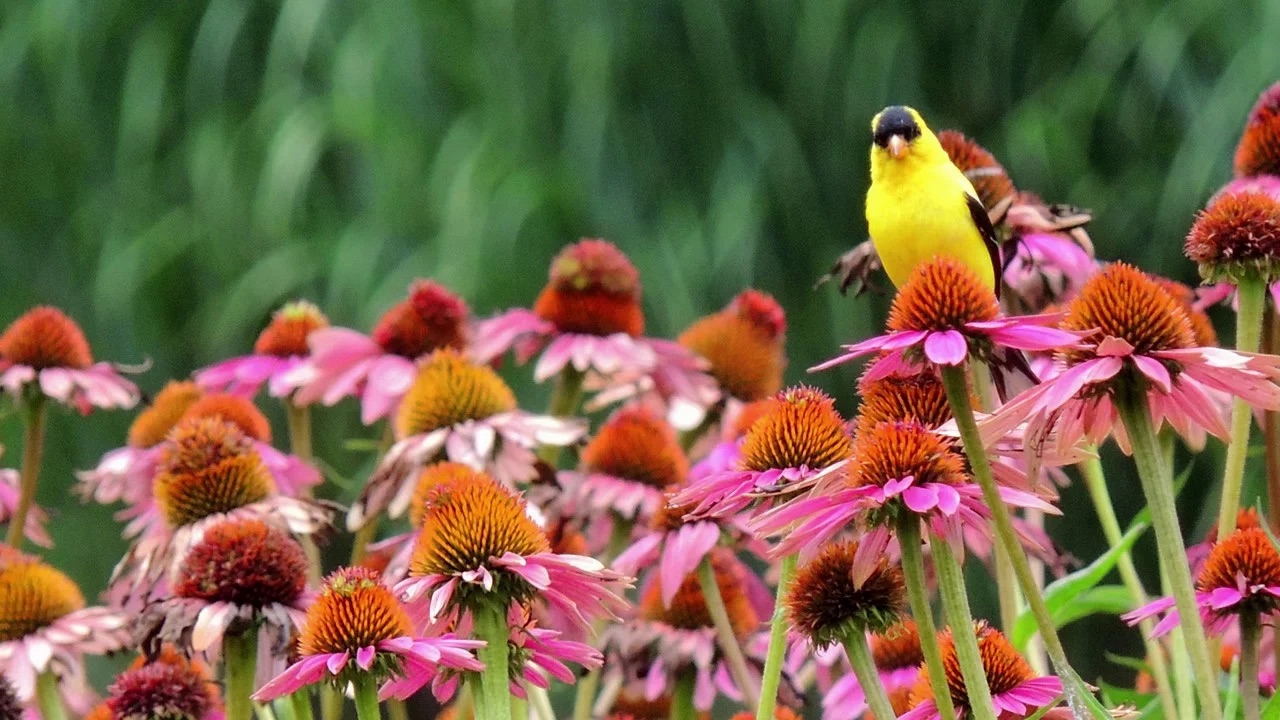
The Essentials
Key points
Four things every bird-friendly yard provides.
Provide food
Plant natives — seed, fruit, or nectar producing plants — or provide the right types of feeders during each season.
Integrate water
Work water sources into your landscape with bird baths, water drips, or small ponds.
Provide shelter
Create places to raise young, escape predators, or stay warm — in dense shrubs, grasses, wildflowers, or nest boxes.
Layer your landscaping
Use native trees, shrubs, grasses, and flowers to create a layered effect: tall trees along the perimeter, descending to shorter trees, shrubs, and then to grasses and flowers.
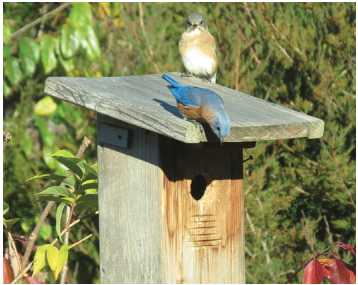
While using bird feeders to attract birds is great (and helps fatten them up for winter and migration), a more helpful and sustainable method of attracting and helping birds is to give them an environment they can thrive in.
That means making your yard work with nature instead of against it — with lots of places to shelter (trees, dead wood, nesting boxes, and so on), plenty of food (from native trees, shrubs, and flowers, and from the insects that live off of those plants), and water sources through bird baths or other means.
If you also want to use bird feeders (which are great!), check out page 8 of the Iowa State bird guide.
Mow Less, Landscape More
Why mowing less is important for birds
Lawns are great and useful, but many people have much more yard than they need, and they waste countless hours mowing and fertilizing to keep it just perfect. To best help birds (and save yourself time), decide how much useable lawn you actually need, and convert the rest to beautiful and interesting landscaping that is attractive to birds. Native flowers, shrubs, and trees provide food and shelter for birds, while a lawn provides nothing.
The National Wildlife Federation has a succinct guide to why lawn reduction is so important (and easy!), with steps on how to get started. The Iowa State bird guide also shows several examples of how this can be done.
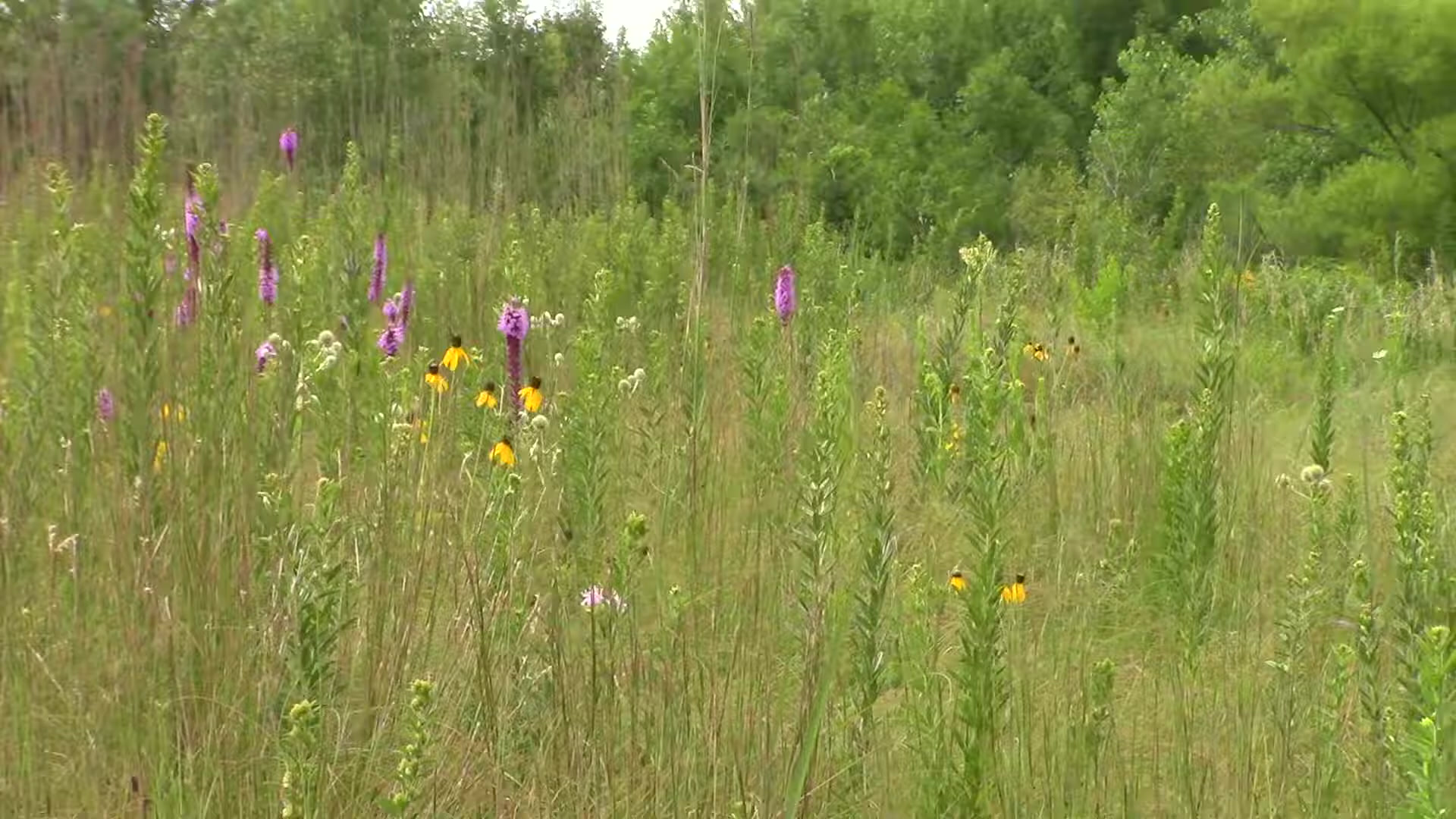
Plant List
Best Iowa trees for birds
Many native Iowa hardwoods provide great cover, housing, and breeding grounds for birds — including oaks, hickories, locust, tulip trees, persimmon, chestnut, hackberry, and cherry. Some trees are less helpful: avoid planting too many ash, maples, and elm if planting for birds is your primary goal.
Recommended species for birds in Iowa
- Pawpaw (Asimina triloba) — small tree; food for wildlife; attracts zebra swallowtail butterfly
- Pecan (Carya illinoinensis) — large tree; wildlife food
- American chestnut (Castanea dentata) — large tree; seeds collected in Illinois
- Sugar hackberry (Celtis laevigata) — large tree; fruit for birds
- Persimmon (Diospyros virginiana) — medium-sized tree; fruit for birds
- Tulip poplar (Liriodendron tulipifera) — large tree; pollinated by bees
- Swamp white oak (Quercus bicolor) — large tree; acorns for wildlife
- Overcup oak (Quercus lyrata) — large tree; wildlife
- Dwarf chestnut oak (Quercus prinoides) — sweet edible nuts for birds and mammals
- American basswood (Tilia americana) — flowers attract bees and other pollinators
Best Iowa shrubs for birds
- American plum (Prunus americana)
- Arrowwood (Viburnum dentatum)
- Blackhaw (Viburnum prunifolium)
- Chokeberry (Aronia spp.)
- Common chokecherry (Prunus virginiana)
- Crabapple (Malus spp.)
- Elderberry (Sambucus spp.)
- Gray dogwood (Cornus racemosa)
- Hazelnut (Corylus americana)
- Highbush cranberry (Viburnum trilobum)
- Nannyberry (Viburnum lentago)
- Ninebark (Physocarpus opulifolius)
- Red-osier dogwood (Cornus sericea)
- Serviceberry (Amelanchier spp.)
- Silky dogwood (Cornus amomum)
- Viburnums (Viburnum spp.)
Best native flowers & grasses for birds
- Blazing star (Liatris spp.)
- Cardinal flower (Lobelia cardinalis)
- Coreopsis (Coreopsis spp.)
- Orange jewelweed (Impatiens capensis)
- Purple coneflower (Echinacea spp.)
- Wild bergamot (Monarda fistulosa)
- Wood lily (Lilium philadelphicum)
- Big bluestem (Andropogon gerardii)
- Indiangrass (Sorghastrum nutans)
- Prairie dropseed (Sporobolus heterolepis)
- Side-oats grama (Bouteloua curtipendula)
- Switchgrass (Panicum virgatum)
There are hundreds and hundreds of native flowers that attract birds — either directly, or by attracting the insects birds like to eat. A full list would be difficult to navigate, but the options above are a few beautiful favorites. You can also browse a handy native plant book or use a tool like the Audubon Native Plants search tool, which lets you browse native trees, shrubs, grasses, and flowers by your zip code, complete with great photos.
The Big Picture
Work with nature, don't fight it
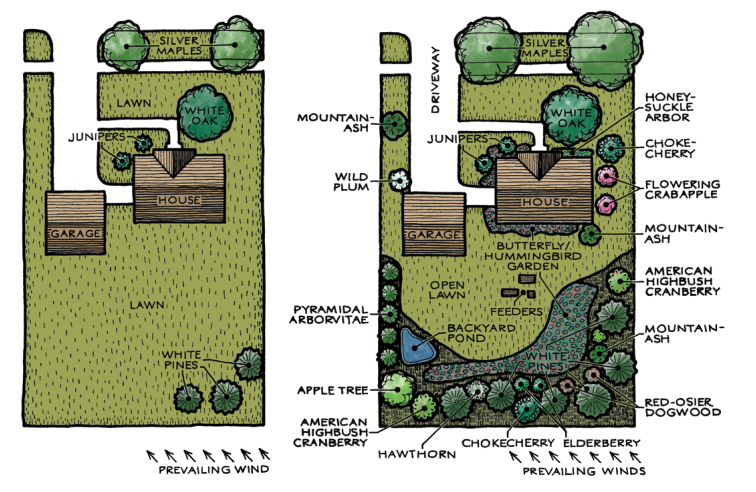
The yard design on the left is probably what many of our yards look like: a lot of lawn and a few trees. This sort of design requires a lot of work on our part, and is very unnatural and unsupportive for birds, butterflies, and all sorts of beautiful and beneficial wildlife.
The design on the right, while requiring more work up front to build, requires less maintenance and is far more attractive and useful to birds. It's an example of working with nature to create useable spaces for us humans and for wildlife like birds — instead of fighting nature to create something stale and lifeless like a huge, barren yard.
Finally, invite and encourage your neighbors! Each yard that embraces nature and provides habitat for native birds supports bird populations, and makes birds more likely to visit your home.
Recommended Reading
Books on supporting & identifying backyard birds
The Native Plant Primer lists 225 beautiful native plants and identifies which are best for birds and the insects they eat. Once your backyard is bird-friendly, a bird guide is handy for identifying which feathered friends are visiting — a fun project for the whole family.
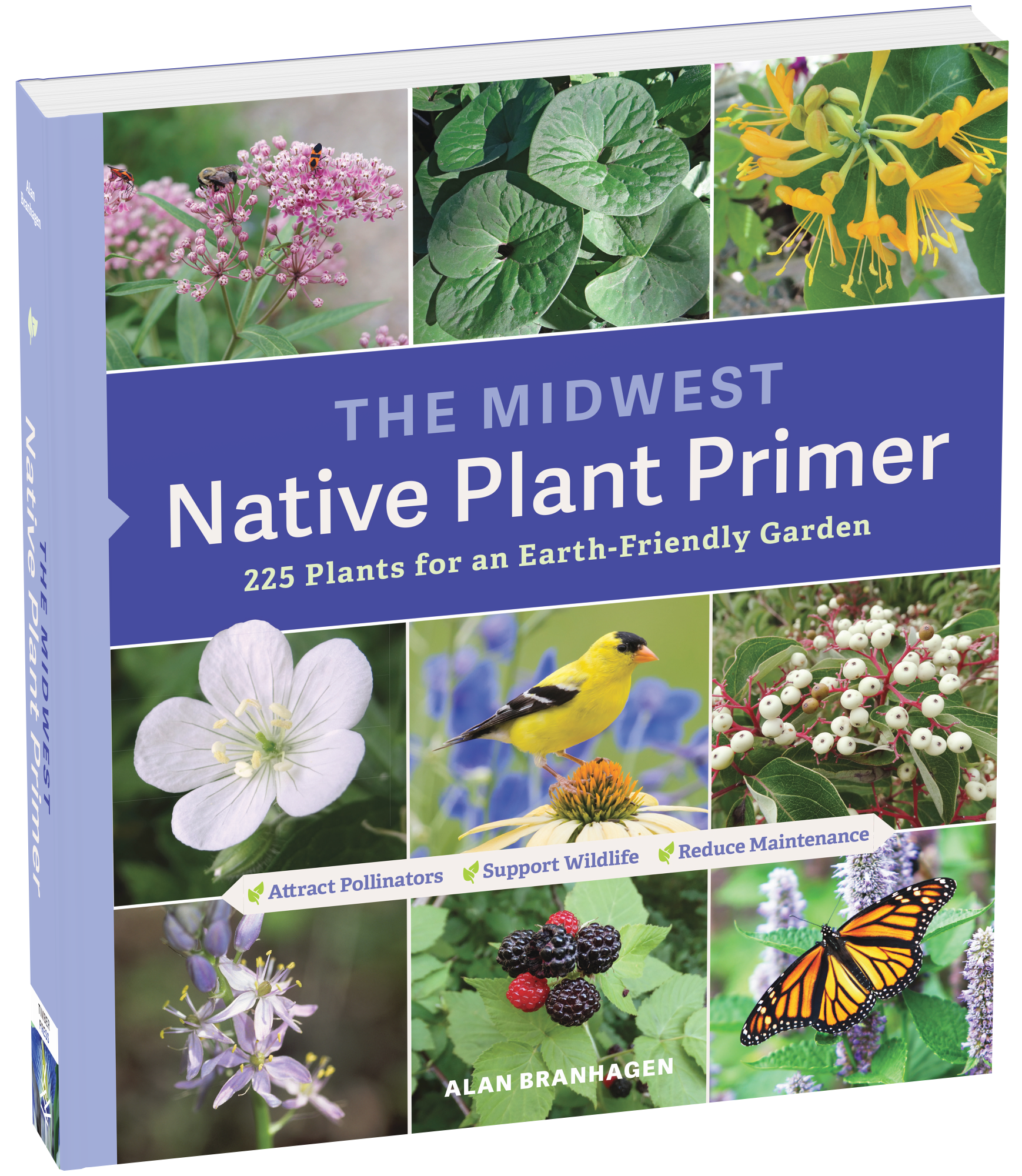
The Midwest Native Plant Primer
225 Plants for an Earth-Friendly Garden
A practical sourcebook covering 225 native plants, noting which wildlife species benefit from each — including which plants are best for birds and the insects they eat.
Buy on Bookshop.org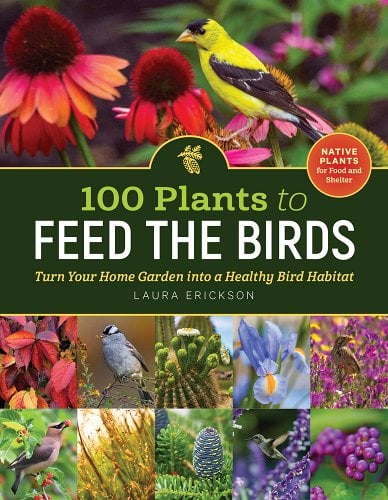
100 Plants to Feed the Birds
Turn Your Home Garden into a Healthy Bird Habitat
A reference guide profiling 100 native plant species that support birds year-round — trees, shrubs, and wildflowers — complete with range maps and photographs to help you plant with birds in mind.
Buy on Bookshop.orgPurchases made through the links above help support Iowa Native Plants and a fund that supports local bookstores. Learn more here.
Iowa's Natural Heritage
As we reflect on our connections to Iowa's native heritage, nature, and the land, let us also remember that the state of Iowa rests on the territorial lands of the Sioux, Sauk, Meskwaki, and Ioway people.